
By Carleen Wild
Moody County Enterprise
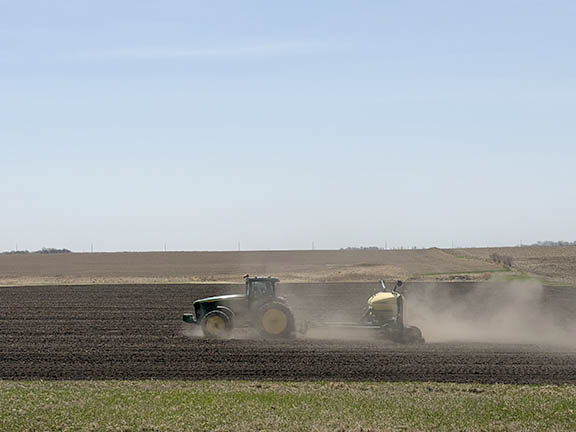
Fertilizer and fuel prices are climbing again as farmers get underway with planting season — something we’re likely all noticing, whether we farm or not.
At a recent River’s Edge Cooperative stockholder meeting, General Manager Casey Kringen pointed to rising fertilizer, fuel and freight costs — all tied closely to global energy markets and ongoing instability in key shipping regions.
Urea, he said, a key nitrogen fertilizer, has seen sharp increases in recent months. Local estimates put current prices near or above $900 per ton, compared to roughly $575 to $600 just six months ago.
Global demand and supply challenges are driving those increases, Kringen said.
“It’s the highest I’ve seen in 16 years…They can’t get it here. Natural gas as well is really high in Europe.”
Despite the spike, many area farmers secured inputs earlier in the season, helping soften the blow. Those who didn’t may face higher costs heading into planting.
“We’re not seeing widespread cutbacks, but there is a stronger focus on efficiency and making every input dollar count,” said Kari Burggraff with Ramsdell F&M, a third-generation ag retailer serving Flandreau and Brookings.
Burggraff said the scenario has become all too common.
“It is unfortunate that over the past several years, input costs for farmers have become much more volatile,” Burggraff said.[Text Wrapping Break]“Prices tend to rise quickly and are slower to come back down, while grain prices have softened, leaving producers with tighter margins.”
Even for those outside of agriculture, the impacts moving into summer and fall, we’re warned will likely be hard to ignore.
Fuel prices — particularly diesel — continue to swing day to day, adding another layer of unpredictability for both suppliers and farmers trying to plan ahead.
“It swings $.20, $.30 every day. Up, down, up, down, up, down,” said Kringen.
Freight costs are close behind, making it more expensive to move everything from fertilizer to finished grain. Experts add we should look for food prices to be impacted as well later this year.
Those who booked products early were better positioned to manage pricing swings, while others are left navigating a market that can shift quickly. Kringen said most local growers were proactive.
“My growers all did a very good job of being in communication with us. We had a plan. They booked it and they bought it.”
He added that’s not the case everywhere, especially outside of this region, “The guys that didn’t plan ahead, you know, they’re the ones that are really gonna feel the brunt of it.”
A federal review is underway, with the U.S. Department of Justice examining whether fertilizer producers may have engaged in practices that pushed prices higher. It is unclear, however, what impact the inquiry might have on prices in the near term.
Leave a Reply